



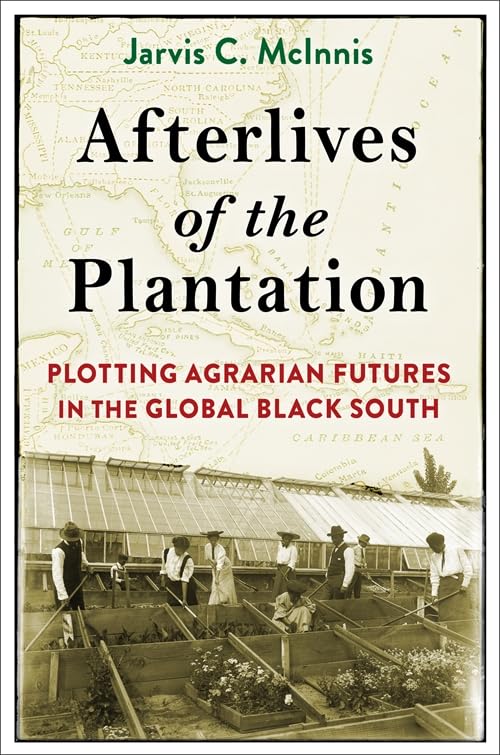
Afterlives of the Plantation: Plotting Agrarian Futures in the Global Black South (Black Lives in the Diaspora: Past / Present / Future) Paperback – May 13, 2025

 4.6 (42 items)
 Limited Time Sale
$24.00 cheaper than the new price!!
Free cash-on-delivery fees for purchases over $99
Product details
| Management number | 219316360 | Release Date | 2026/05/03 | List Price | $16.00 | Model Number | 219316360 | ||
|---|---|---|---|---|---|---|---|---|---|
| Category | |||||||||
Winner, 2026 Pauli Murray Book Prize in Black Intellectual History, African American Intellectual History SocietyWinner, 2026 ASALH Book Prize, Association for the Study of African American Life and HistoryWinner, 2025 On the Brinck Book Award, University of New Mexico School of Architecture and PlanningBuilt on the grounds of a former cotton plantation, the Tuskegee Institute, founded by Booker T. Washington, offered agricultural and industrial education as a strategy for Black self-determination. There―and in many other communities in the U.S. South, the Caribbean, and Central America―Black people repurposed and regenerated what had been a place of enslavement into a site for imagining alternative futures.Jarvis C. McInnis charts a new account of Black modernity by centering Tuskegee’s vision of agrarian worldmaking. He traces the diasporic ties and networks of exchange that linked Black communities in the late nineteenth and early twentieth centuries. Although Washington is often regarded as an accommodationist, McInnis shows how artists, intellectuals, and political leaders―including George Washington Carver, Jean Price-Mars, Zora Neale Hurston, Claude McKay, and Marcus Garvey―adapted Tuskegee’s methods into dynamic strategies for liberation in places like Cuba, Puerto Rico, Haiti, and Jamaica. Even as the legacy of the plantation continued to circumscribe Black life, these thinkers found resources in its ruins to forge new theories and practices of progress, aesthetic innovation, and freedom that contributed to the New Negro Movement of the 1920s and 1930s.In contrast to traditional understandings of Black modernity as urban and premised on northward migration, McInnis foregrounds rural settings and practices of place making, rootedness, and liberatory agriculture. Shedding new light on the transnational influence of a historically Black institution in the U.S. South, Afterlives of the Plantation remaps Black cultural, intellectual, and political histories down to the very soil. Read more
| ISBN10 | 0231215754 |
|---|---|
| ISBN13 | 978-0231215756 |
| Language | English |
| Publisher | Columbia University Press |
| Dimensions | 6 x 1.25 x 9 inches |
| Item Weight | 1.65 pounds |
| Print length | 480 pages |
| Publication date | May 13, 2025 |
Bestseller ranking
20th Century


Customers who viewed this product also viewed
Blanket Sleepers





Correction of product information
If you notice any omissions or errors in the product information on this page, please use the correction request form below.
Correction Request Form